IPTV vs cable TV is the question most households ask when the cable bill goes up again. Both give you live channels, sport and on-demand shows, but they are priced, delivered and contracted very differently. This guide compares them honestly on cost, contracts, channels, picture quality and convenience, using SofaIPTV’s own published prices as the IPTV example, so you can work out which one actually suits your home.
If IPTV is new to you, our guide to what IPTV is and how it works covers the basics in a few minutes.
IPTV vs cable at a glance
- Delivery: cable runs over the provider’s own network to a set-top box; IPTV runs over your existing broadband to an app on your TV, stick, phone or computer.
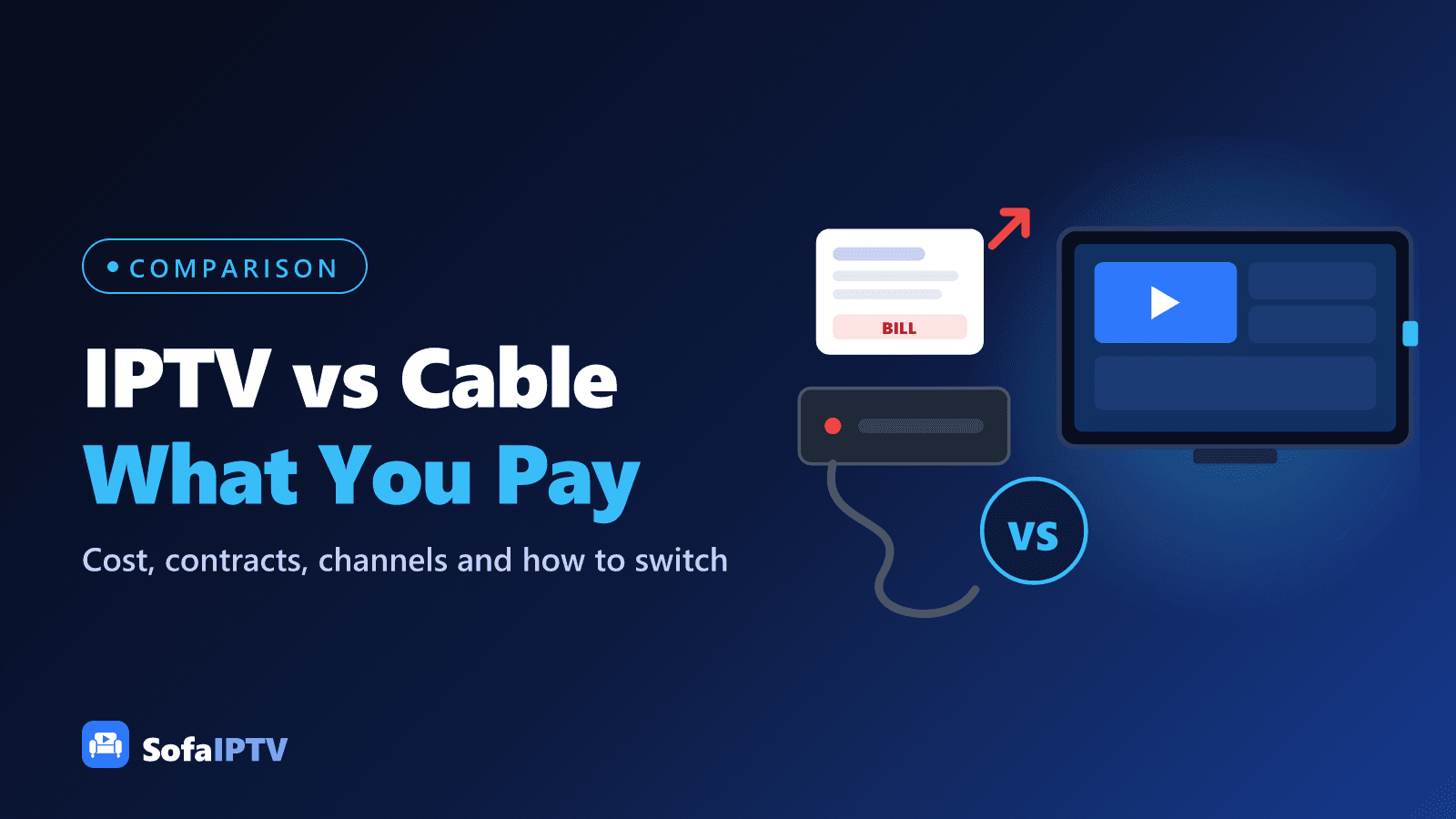
- Monthly cost: cable packages commonly run to $80 or more a month once box rental and fees are added; IPTV plans usually cost a fraction of that.
- Contracts: cable often ties you in for 12–24 months; IPTV plans typically run for a few months at a time with no long contract.
- Installation: cable may need a technician visit; IPTV needs only an app and a login.
- Screens: cable charges per extra box; IPTV works on devices you already own, limited only by the number of simultaneous connections.
- Reliability: cable does not depend on your broadband; IPTV does, so your home connection matters.
How much does IPTV cost compared with cable?
Cable prices vary by provider and region, so check your own bill, but the headline package price is rarely the whole story. Box rental, extra-room fees, sports add-ons, regional sports fees and price rises after an introductory period all add up. With SofaIPTV, the price you see covers the whole plan: $69 for 12 months on one screen works out at about $5.75 a month, and a family plan with three screens for 12 months is $162, about $13.50 a month for the whole household.
To compare fairly, add up everything on your cable bill for one month, including taxes and equipment, and divide any IPTV plan by its number of months. Our guide to choosing an IPTV plan walks through the numbers.
Hidden costs to check on each side
- Cable: set-top box and DVR rental, fees for extra rooms, sports and regional fees, installation charges, early termination fees, and price increases when a promotion ends.
- IPTV: a streaming device if your TV can’t run the apps (a stick costs a one-off amount), an optional paid player app, and enough broadband speed for the screens you use.
Contracts and cancellation
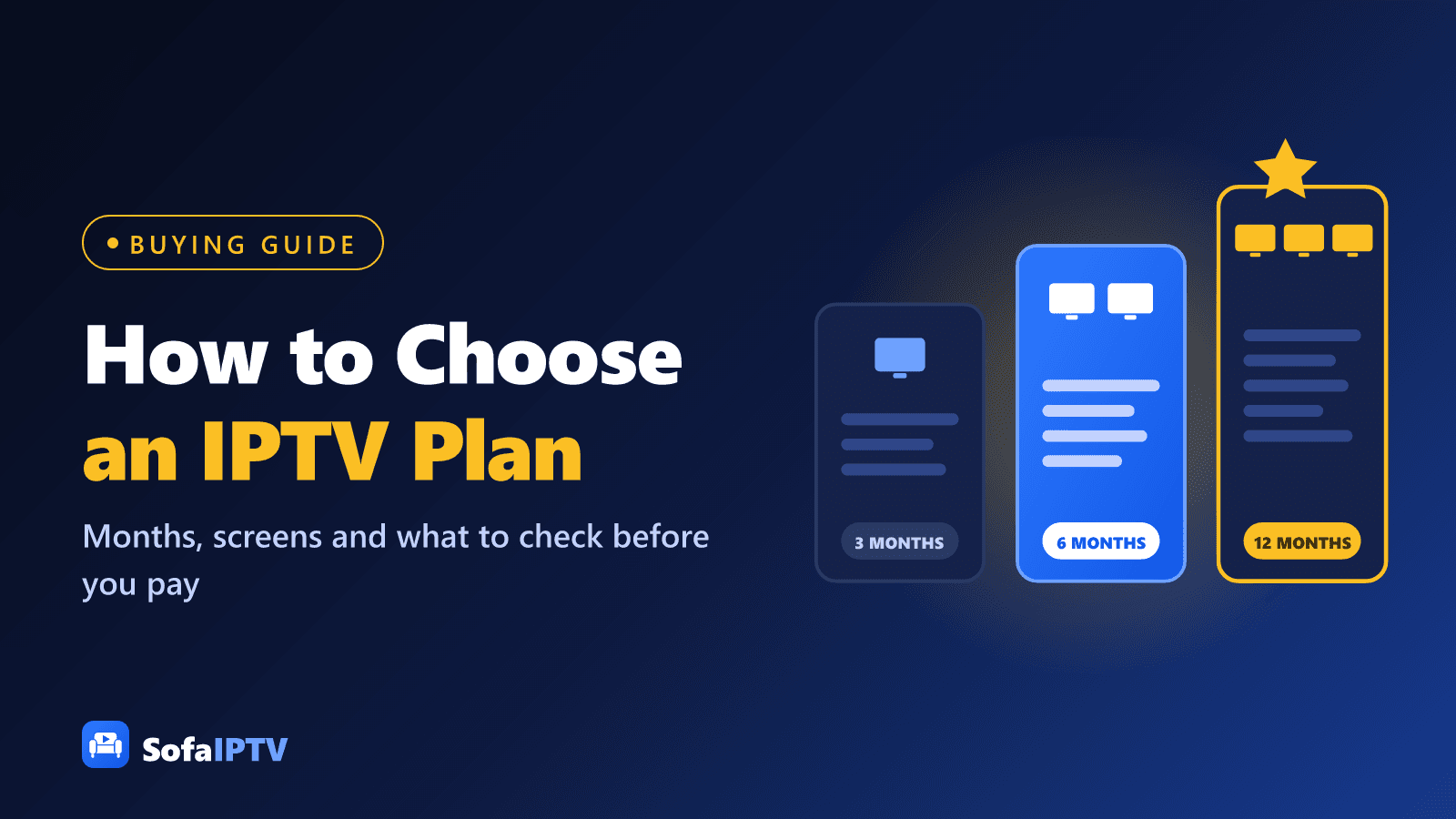
Cable and satellite deals in the US, Canada and much of Europe often come with 12- or 24-month terms and fees for leaving early. IPTV services usually sell plans for a fixed period instead. Ours run for 3, 6 or 12 months and do not renew automatically, so nothing is charged when a plan ends unless you choose to renew.
Channels, sport and on-demand
Cable packages are built around tiers: you pay more to unlock sports or premium channels. IPTV services usually include their whole catalog in every plan, alongside an on-demand library of films and series, so the plan length and number of screens are what change the price.
Whichever you choose, check that the specific channels and leagues you watch are included before paying, and test them at peak time. Our 24-hour free test checklist shows how.
Picture quality and reliability
Cable runs on a managed network, so its picture is consistent regardless of your home Wi-Fi. IPTV quality depends on your broadband: about 10 Mbps per Full HD stream and 25 Mbps for 4K, with a wired connection giving the most stable result. On a good connection, IPTV can match or beat cable, including 4K where the channel offers it. If you see freezing, our IPTV buffering guide covers the fixes.
Devices and watching in other rooms
With cable, every extra TV usually means another rented box. With IPTV, you install an app on the smart TVs, sticks, phones, tablets and computers you already own. What you pay for is the number of screens watching at the same time, explained in our guide to how many IPTV connections you need.
Is IPTV legal?
IPTV is a delivery technology used by major broadcasters and telecom companies. Whether a particular service is lawful depends on whether it holds the rights to what it distributes and on the rules where you live, which differ between the US, Canada and each European country. Before switching, check a provider’s terms, refund policy and contact details; our article on what you can check before paying lists the questions to ask.
Who should stick with cable, and who should switch?
- Stay with cable if your broadband is slow or unreliable, you need everything on one bill with your internet, or someone in your home won’t use apps.
- Switch to IPTV if your cable bill keeps rising, you want to watch on several devices without renting boxes, or you don’t want a long contract.
How to switch from cable to IPTV
- Check your broadband speed on the TV in the evening.
- Start a free trial and test your must-have channels at peak time.
- Install a player app on each TV, or add a stick to older ones; see our Firestick installation guide.
- Pick a plan with enough screens for your busiest evening.
- Cancel cable only once you’re happy, and check its notice period and box return rules.
Summary
For most households with decent broadband, IPTV costs far less than cable, avoids long contracts and works on the screens you already own. Cable still wins on reliability where internet is poor. The best way to decide is to test it in your own home: start a 24-hour free trial of SofaIPTV, then compare every plan on our pricing page.
Frequently asked questions
Is IPTV cheaper than cable?
Usually, yes. Once box rental and fees are included, cable packages often cost several times more per month than an IPTV plan. Compare your full monthly cable bill with an IPTV plan’s total price divided by its months.
Is IPTV as reliable as cable?
On a good, preferably wired, broadband connection it can be. Cable does not depend on your internet, so it is more consistent where broadband is weak.
Can I keep my local channels if I switch from cable to IPTV?
It depends on the service. Check that your local and must-have channels are included during a free trial before cancelling cable.
Do I need a contract for IPTV?
Not with SofaIPTV. Plans run for 3, 6 or 12 months and do not renew automatically.